Customers are grown, not captured
Customer experience is grown, not captured. Why this blog is called what it is, what cultivation means on a Monday morning, and what you will find here.
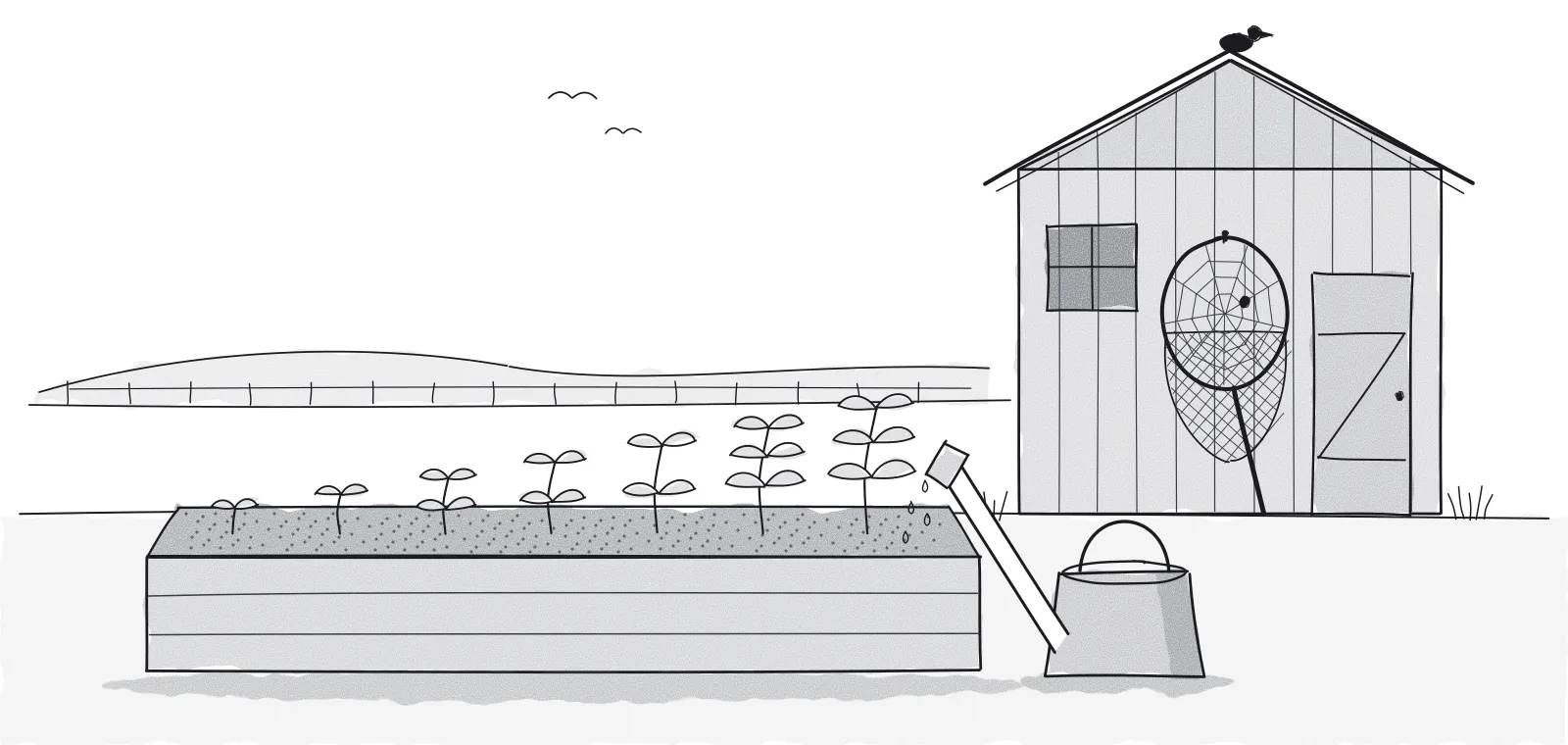
Most of the language we use about customers is the language of hunting. We acquire them. We target them. We capture leads, convert prospects and win deals. Then, once we have them, we retain them, which sounds like something you do with a wall.
I have spent a good part of my working life inside companies that talk this way, and I understand why. Hunting is fast. It has a scoreboard. It fits neatly into a quarter.
But it describes almost nothing about how a customer relationship actually works.
The other metaphor
A customer relationship is grown. It starts small and fragile. It needs the right conditions more than it needs pressure. It responds to attention over time, and it is quietly ruined by neglect long before anyone notices the leaves turning. You cannot make it grow faster by shouting at it. You can only remove what is in the way and keep showing up.
That is the metaphor this blog is built on, and the name says it plainly: cultivating your customers.
I did not invent the name. The domain has been around since 2009, and when it became available in 2026 I took it, because I could not think of a better two-word description of the work I care about. Everything you will read here is new. A few addresses are simply older than the articles that live at them, and each of those says so at the top.
What cultivation means on a Monday
Metaphors are cheap until they change what you do at work. Here is how I use this one.
Soil is culture and data. Nothing grows in bad soil, and no amount of clever campaign work makes up for a company that does not, in its bones, want to know what customers think. The soil is also the unglamorous data underneath: who the customer is, what they bought, what they told you last time, and whether anyone wrote it down.
Listening is watering. Voice of the customer is not a survey tool. It is the habit of asking, reading, and going back to the customer with what you heard. Done rarely and in bulk, it floods. Done regularly and in the right amount, it keeps things alive.
Weeding is removing friction. Most customer experience improvement is not adding delight. It is pulling out the thing that has been strangling the plant for two years: the form nobody can complete, the policy that made sense in 2019, the handoff between two teams where every customer falls through.
Seasons are patience. Loyalty has a season, and it is not this quarter. The measurement problem in customer experience is mostly a time problem. The costs land now and the returns land later. A good part of this blog will be about how to measure honestly across that gap.
The harvest is loyalty and lifetime value. Not the number on the dashboard, but the thing the number is trying to describe: customers who stay, buy again, forgive the occasional mistake, and tell other people.
And the gardener keeps a notebook. Which is what this site is.
What you will find here
Six categories, kept deliberately small:
- Customer Experience: strategy, journeys, culture, and the everyday decisions that shape what customers go through.
- Voice of the Customer: listening programs, feedback loops, and turning what customers say into what the company does.
- Surveys & Research: NPS, CSAT, CES, survey design, sampling, and the craft of asking good questions.
- Customer Analytics: lifetime value, retention math, control groups, data quality, and measurement that holds up in a board meeting.
- Loyalty & Retention: churn, loyalty, relationship marketing, and the long game of keeping the customers you already have.
- Field Notes: shorter pieces, stories from practice, and observations that did not fit anywhere else.
Tags cut across the categories. If you want to follow one thread, say control groups or closing the loop, the tag page is the place to start.
Kept current
Posts here are not finished when they go up. I come back to the ones that matter and improve them, and every post shows when it was published and when it was last updated. If something is wrong, tell me, and I will fix the post itself rather than write a correction nobody reads.
Who is writing
My name is Vaclaw Karlfeld. I studied at TU Berlin, then spent years in consulting at KPMG and Cognizant, mostly helping companies work out what their customers were actually experiencing and what to do about it. Customer experience and voice of the customer stopped being a job description a long time ago and became the thing I think about on walks. There is a longer version on the about page.
A note on how I write
Plain words. Long where the topic needs it, never padded. No stock photos of people pointing at whiteboards. When I quote a number, it will come with a source, and when I do not have a source, I will say it is my experience and nothing more. I am not selling a framework, and if I ever start, the name of this blog will be there to remind me that nothing worth having grows that fast.
Welcome. Pull up a chair, or a trowel.